Follow us on :
14,000+ Verified Eye Care Professionals for Targeted Healthcare Marketing
The ophthalmology market represents one of the most specialized and high-value segments in healthcare marketing. Eye care professionals—from cataract surgeons to retinal specialists—make critical purchasing decisions for medical devices, pharmaceutical products, diagnostic equipment, and practice management software. Yet reaching these specialists with precision remains a significant challenge for healthcare marketers, medical device companies, and pharmaceutical sales teams.
A verified ophthalmologist email list serves as a strategic gateway to these decision-makers. Rather than casting a wide net with generic healthcare contacts, a specialized database of ophthalmologists enables targeted outreach campaigns that resonate with the specific clinical interests, practice settings, and technology adoption patterns of eye care professionals.
CampaignLake’s Ophthalmologist Email List provides access to 14,000+ verified eye care professionals across the United States and 150+ countries worldwide. Each contact has been validated through a rigorous 7-step verification process, ensuring 95% accuracy and exceptional deliverability rates for your healthcare marketing campaigns.
Verified
Opt-in Contacts
Deliverability
DataFields


An ophthalmologist email list is a curated database of licensed eye care professionals who specialize in the diagnosis, treatment, and surgical management of eye diseases and vision disorders. Unlike generic physician databases, ophthalmologist-specific lists provide granular segmentation by subspecialty, practice type, geographic location, and technology adoption patterns.
A comprehensive ophthalmologist database goes far beyond basic contact details, offering rich, multi-dimensional data that enables highly precise targeting. It includes essential contact information such as full name, business email, phone numbers, and mailing address, along with detailed professional insights like NPI number, medical license, specialty, subspecialty, and board certifications. Additionally, it captures practice-level data including practice name, facility type, website, and years in practice—giving marketers a complete view of each ophthalmologist’s professional profile.
Beyond this, advanced datasets also provide firmographic and geographic intelligence, such as practice size, revenue range, employee count, ownership type, and detailed location data (city, state, ZIP code, region, and country). This depth of information empowers businesses to run highly targeted, multi-channel campaigns across email, phone, direct mail, and LinkedIn. The more data fields available, the more effectively you can segment audiences, personalize messaging, and improve overall campaign performance and ROI.
Ophthalmology encompasses diverse subspecialties, each representing distinct clinical interests and purchasing patterns. Understanding these specializations enables highly targeted campaigns that resonate with specific professional segments.
General ophthalmologists provide broad-spectrum eye care, including refractive surgery, cataract management, glaucoma screening, and treatment of common eye diseases. This segment represents approximately 40% of practicing ophthalmologists and serves as an excellent target for general ophthalmic equipment, practice management software, and broad-spectrum pharmaceutical products.
This subspecialty focuses on surgical correction of cataracts and refractive errors including myopia, hyperopia, and astigmatism. These specialists represent high-value targets for premium intraocular lenses (IOLs), advanced surgical platforms, and diagnostic equipment. The cataract and refractive surgery market demonstrates robust growth, driven by aging populations and increasing demand for premium vision correction options.
Retinal specialists diagnose and treat diseases affecting the retina, vitreous, and macula, including diabetic retinopathy, age-related macular degeneration, retinal detachment, and macular holes. These specialists utilize advanced diagnostic imaging and surgical platforms, making them prime targets for optical coherence tomography (OCT) systems, anti-VEGF pharmaceuticals, and retinal surgical instruments.
Glaucoma specialists focus on diagnosis and management of glaucoma, a progressive optic neuropathy characterized by elevated intraocular pressure and optic nerve damage. This subspecialty represents a high-value segment for pharmaceutical companies marketing glaucoma medications, as well as manufacturers of tonometry devices and visual field analyzers.
Cornea specialists address diseases and disorders of the cornea, conjunctiva, and external eye structures, including keratoconus, corneal dystrophies, dry eye disease, and post-surgical complications. These specialists represent key targets for corneal topography systems, advanced contact lens designs, and dry eye therapeutics.
Neuro-ophthalmologists specialize in vision disorders related to neurological conditions, including optic nerve diseases, visual field defects, and eye movement disorders. This highly specialized segment serves as an excellent target for advanced imaging systems and neurological therapeutics with ophthalmic applications.
Oculoplastic surgeons address aesthetic and reconstructive procedures involving the eyelids, lacrimal system, and orbital structures. This subspecialty represents a distinct market for specialized surgical instruments, implant materials, and aesthetic products.
Pediatric specialists focus on eye care for children, including amblyopia (lazy eye), strabismus (eye misalignment), and congenital eye abnormalities. This segment represents a unique target for pediatric-specific diagnostic equipment and therapeutic interventions.
Anterior segment specialists focus on diseases and disorders of the cornea, lens, iris, and anterior chamber, providing both medical and surgical management. This segment overlaps with cornea specialists but includes broader anterior segment pathology.
Uveitis specialists manage inflammatory eye diseases, including uveitis, scleritis, and episcleritis. This highly specialized segment represents a valuable target for anti-inflammatory pharmaceuticals and advanced diagnostic imaging systems.
Geographic targeting is often just as important as industry targeting. Different regions have different regulatory environments, incentive structures, and market maturity levels.
Medical device companies selling phacoemulsification systems, OCT imaging machines, surgical microscopes, and diagnostic instruments—part of a $26.14 billion market by 2030—rely on direct access to ophthalmologists. These physicians evaluate equipment, recommend purchases, and often sign off on capital expenditures for their practices or hospital departments.
Teams promoting treatments for glaucoma, dry eye syndrome, retinal diseases, and post-surgical care benefit from reaching prescribing physicians directly. Ophthalmologists influence formulary decisions and shape treatment protocols for their patient populations.
Providers of EHR systems, practice management software, patient scheduling tools, and telehealth platforms find ophthalmology practices receptive to technology upgrades. Many practices are actively modernizing their digital infrastructure, with 44% of clinics adopting AI-based diagnostics.
Ophthalmology remains competitive for recruitment, with a projected 30% workforce shortage by 203500677-2/fulltext). Staffing agencies and hospital systems use targeted lists to source candidates for positions across academic medical centers, private practices, and healthcare networks.
An ophthalmologist email list serves diverse industries and use cases, each with distinct objectives and ROI metrics.
New medical devices, surgical instruments, or pharmaceutical treatments reach their target audience faster through direct email campaigns. Launch announcements can include clinical data, pricing details, and demo request options.
Industry conferences, CME courses, and product demonstrations benefit from targeted invitations. Ophthalmologists are more likely to attend events relevant to their subspecialty and practice type.
Healthcare recruiters use these lists to source candidates for open positions. Personalized outreach highlighting location, compensation, and practice culture tends to generate stronger response rates than generic job postings.
High-value practices or healthcare systems warrant personalized, multi-touch campaigns. ABM strategies combine email, phone, direct mail, and LinkedIn to build relationships with key accounts over time.
Electronic health record (EHR) and practice management software companies target ophthalmologists with demonstrations, trial offers, and case studies highlighting workflow efficiency and financial benefits. Email campaigns segmented by practice size and specialty enable software providers to customize messaging for solo practitioners, group practices, and institutional settings.
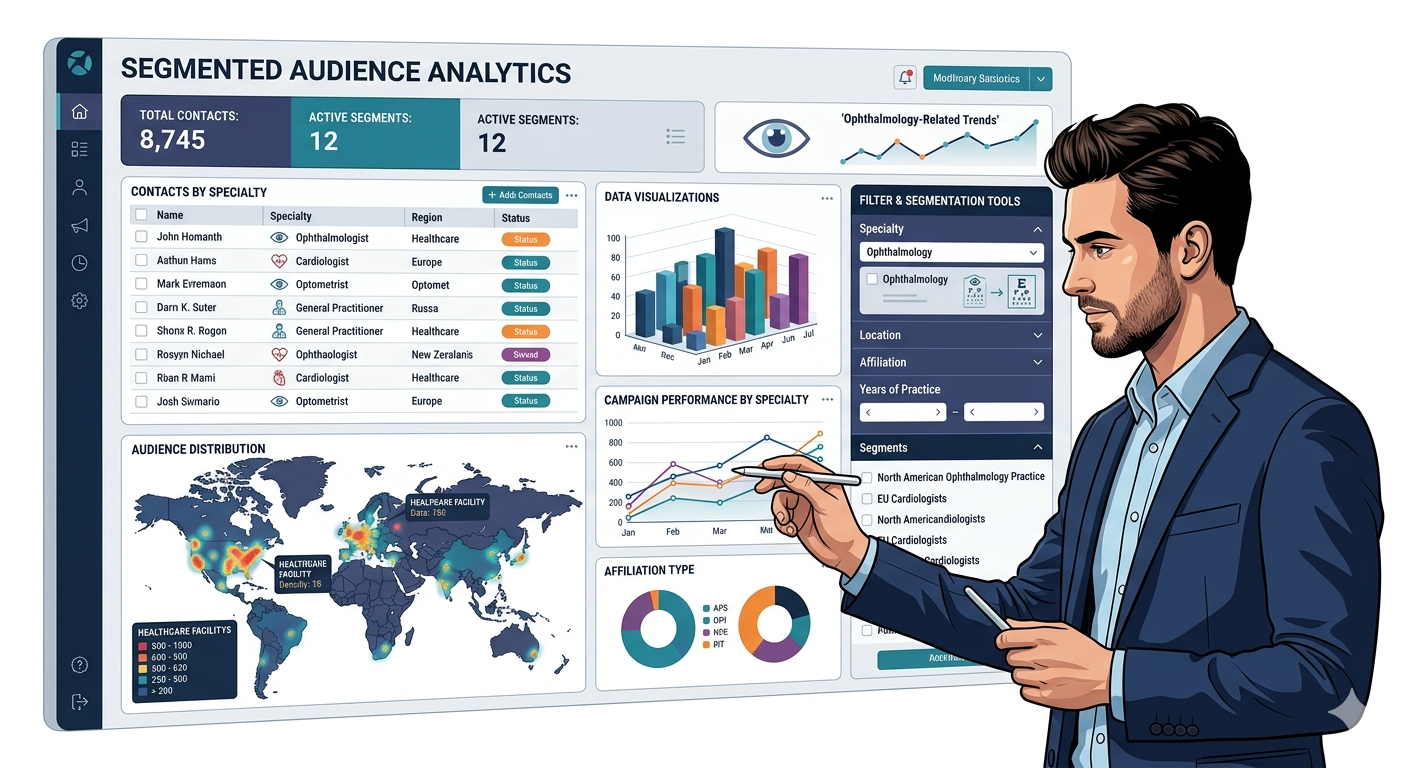
CampaignLake’s ophthalmologist database includes 50+ data attributes enabling sophisticated segmentation and personalization strategies.
Target ophthalmologists by country, state, city, or metropolitan area. Geographic segmentation enables localized campaigns, regional product launches, and market-specific outreach strategies.
Segment ophthalmologists by practice environment: private practice, hospital-based, academic medical center, or ambulatory surgery center. Practice setting significantly influences purchasing patterns, decision-making timelines, and budget availability.
Target early-career ophthalmologists (0-5 years) who may be establishing practices and purchasing initial equipment, or experienced specialists (15+ years) who may be upgrading existing systems or mentoring younger colleagues.
Segment by primary subspecialty focus, enabling campaigns tailored to specific clinical interests and purchasing patterns.
Target early adopters of new technologies or specialists with established preferences for specific equipment manufacturers.
Segment by number of ophthalmologists in the practice, enabling customized messaging for solo practitioners versus group practices.
Our ophthalmologist database undergoes a rigorous seven-step verification process:
This comprehensive verification process delivers 95% accuracy rates, significantly outperforming industry standards of 70-80%.
CampaignLake’s ophthalmologist database distinguishes itself through several key differentiators that directly impact campaign performance and ROI.
Our database contains 14,000+ verified ophthalmologist contacts worldwide, with 6,000+ USA-based specialists. Each contact undergoes a seven-step verification process combining artificial intelligence and human verification to ensure accuracy. This rigorous validation process delivers 95% accuracy rates and 99.9% email deliverability, significantly outperforming industry averages.
Beyond email addresses and phone numbers, our database includes 50+ data points for each contact. These data attributes enable sophisticated segmentation and personalization strategies that significantly improve campaign performance. Available data points include job title, practice setting (private practice, hospital, academic institution), years of experience, technology adoption patterns, and clinical focus areas.
All ophthalmologist contacts are sourced through legitimate channels and verified for compliance with GDPR, HIPAA, CCPA, ACMA, EDPS, and CAN-SPAM regulations. This comprehensive compliance framework protects your organization from legal liability while ensuring ethical data practices that build long-term brand reputation.
Ophthalmology encompasses numerous subspecialties, each with distinct clinical interests, purchasing patterns, and communication preferences. CampaignLake's database segments ophthalmologists across ten major subspecialties, enabling laser-focused targeting for specialized products and services.
While maintaining strong coverage of the United States ophthalmology market, CampaignLake's database extends across 150+ countries, enabling international expansion for global healthcare companies. Our data sourcing methodology respects regional privacy regulations and cultural preferences, ensuring compliant outreach in every market.
Unlike static, pre-packaged databases, CampaignLake offers on-demand custom list building tailored to your exact targeting criteria. Whether you need ophthalmologists by subspecialty, location, experience level, or practice type, our team delivers a highly refined dataset aligned with your ideal customer profile (ICP). This ensures your campaigns are not just broad—but hyper-targeted, relevant, and conversion-ready from day one.
Healthcare data handling requires strict adherence to multiple regulatory frameworks. CampaignLake’s ophthalmologist database complies with all major data protection regulations.
All European ophthalmologist contacts are sourced and maintained in compliance with the General Data Protection Regulation (GDPR). We maintain documented consent for all European contacts and provide data processing agreements (DPAs) for enterprise customers.
All California-based ophthalmologist contacts comply with the California Consumer Privacy Act (CCPA), including consumer rights to access, deletion, and opt-out.
Australian ophthalmologist contacts comply with Australian Communications and Media Authority (ACMA) regulations governing electronic marketing.
While HIPAA primarily regulates covered entities and business associates, CampaignLake maintains HIPAA-aligned practices for healthcare data handling, including access controls, audit logs, and data security measures.
Our database supports CAN-SPAM compliance through accurate contact information, enabling proper identification of senders and accurate opt-out processing.
All ophthalmologist contact data is encrypted at rest and in transit. Access is restricted to authorized personnel, and all data handling is logged and audited. Regular security assessments ensure ongoing protection against unauthorized access or data breaches.
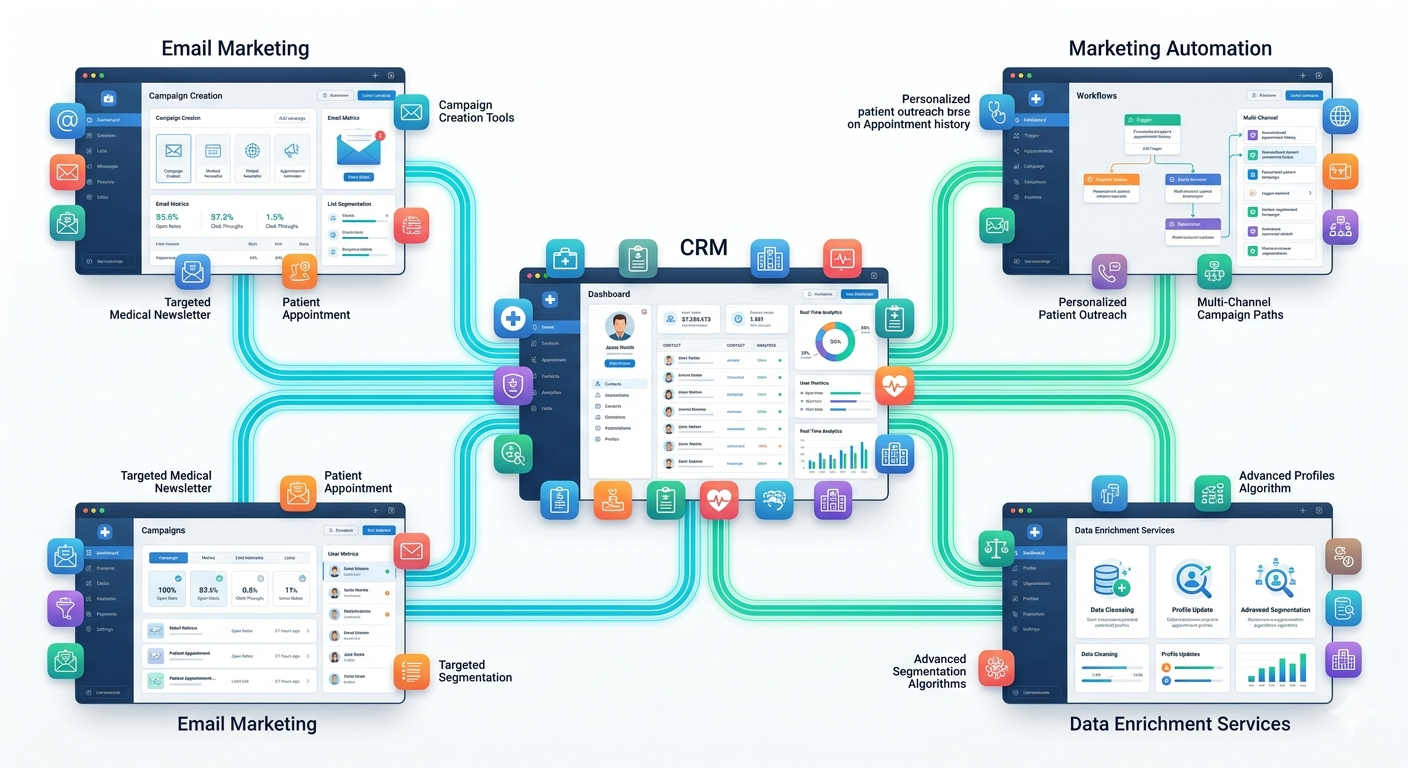
CampaignLake’s ophthalmologist email list integrates seamlessly with industry-standard marketing automation platforms, CRM systems, and email service providers.
Ophthalmologist email campaigns demonstrate strong performance metrics when properly segmented and personalized.
Targeted ophthalmologist campaigns typically achieve open rates of 28-35%, significantly outperforming untargeted healthcare email benchmarks of 18-22%. Subspecialty segmentation and personalization drive higher engagement.
Ophthalmologist email campaigns typically achieve click-through rates of 4-6%, reflecting the professional nature of the audience and relevance of targeted messaging.
Conversion rates vary by industry and use case but typically range from 2-8% for qualified ophthalmologist leads, depending on offer relevance and sales follow-up effectiveness.
Email marketing to ophthalmologist lists typically costs $0.50-$2.00 per lead, significantly lower than alternative B2B healthcare marketing channels including paid search ($5-$15 per click) and direct mail ($3-$8 per piece).
Launching successful ophthalmologist email campaigns begins with a clear strategy aligned to your business objectives.
Identify which ophthalmology subspecialties align with your products or services. Consider geographic markets, practice settings, and other relevant segmentation criteria.
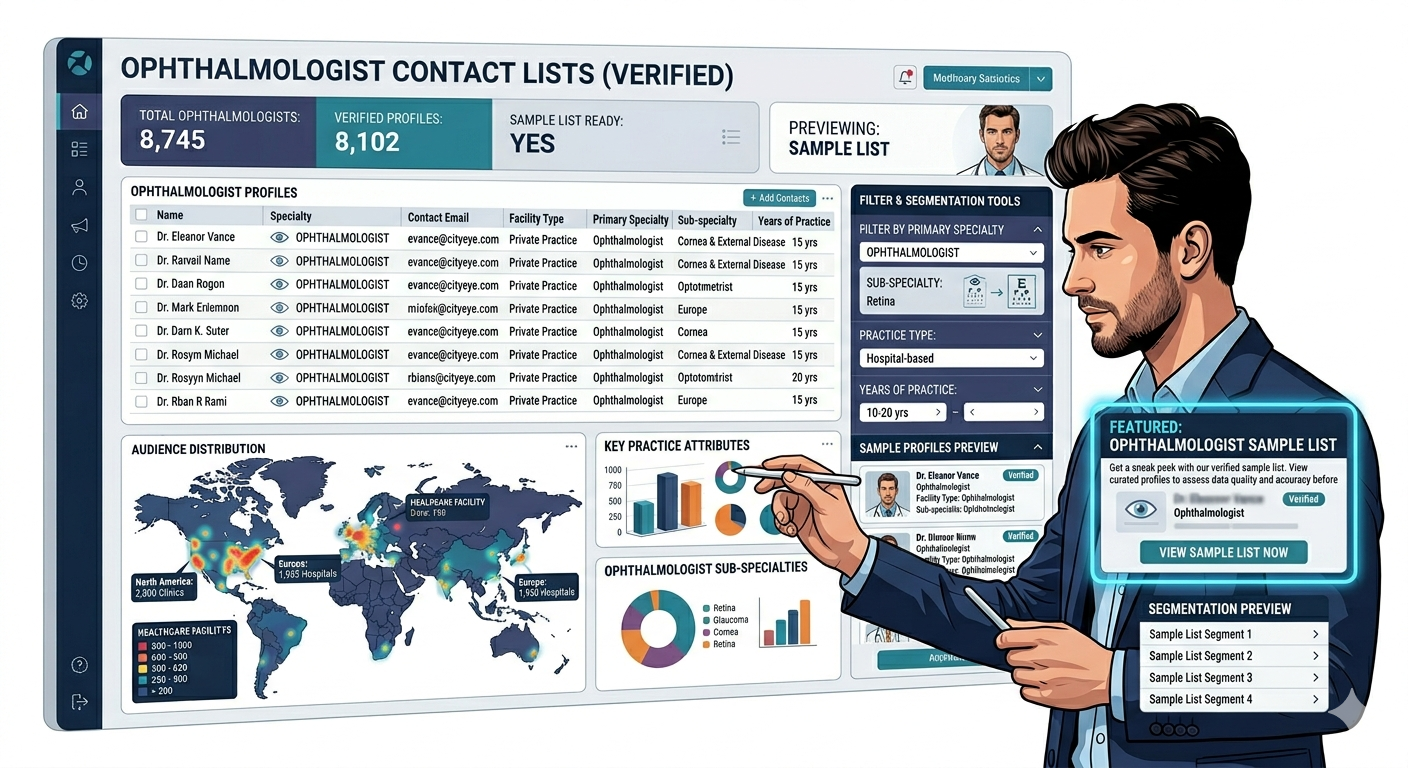
Request a free sample list of 100-500 verified ophthalmologist contacts matching your target criteria. Evaluate data quality, relevance, and completeness before committing to a full database.
Create compelling email content tailored to your target audience’s clinical interests and professional challenges. Develop a multi-touch campaign strategy including initial outreach, follow-up sequences, and nurture campaigns.
Import your ophthalmologist list into your CRM platform or email service provider. Utilize available data attributes to create sophisticated segments enabling personalized messaging.
Deploy your campaigns and monitor key performance metrics including open rates, click-through rates, and conversions. Use performance data to optimize future campaigns.
Based on campaign performance, refine your targeting, messaging, and timing to continuously improve results.
Ready to transform your healthcare marketing strategy? Request your free sample list today and discover why leading medical device companies, pharmaceutical manufacturers, and healthcare organizations trust CampaignLake’s ophthalmologist email database.
Make Your Marketing Goal as specific as possible and get in touch with CampaignLake at reach@campaignlake.com or call +1 (657)-347-3363 to avail our highly responsive Ophthalmologists Email List!
CampaignLake refreshes its entire ophthalmologist database quarterly to reflect market changes, practice transitions, and new specialists entering the market. This commitment to data freshness ensures your campaigns reach active, engaged professionals.
We guarantee 95% accuracy for all ophthalmologist contacts, verified through our seven-step verification process. If accuracy falls below 95%, we provide replacement contacts at no additional charge.
Yes. Our database includes detailed subspecialty segmentation across ten major ophthalmology specializations, enabling highly targeted campaigns for specialized products and services.
Yes. All ophthalmologist contacts comply with GDPR, HIPAA, CCPA, CAN-SPAM, ACMA, and other major data protection regulations. We provide documentation of compliance and data processing agreements for enterprise customers.
We provide ophthalmologist lists in .csv, .xlsx, and .txt formats compatible with all major CRM platforms, email service providers, and marketing automation systems.
Yes. We offer free sample lists of 100-500 verified ophthalmologist contacts, enabling you to evaluate data quality and relevance before making larger purchases.
Standard list delivery occurs within 24 hours of purchase. Custom segmentation or enrichment may require 2-3 business days.
Yes. We provide custom segmentation by subspecialty, geographic location, practice size, years of experience, and 50+ additional data attributes.