Follow us on :

- Our Database
- Industry
- Healthcare
- Technology
- International
- C - Level
- Professionals
- Datacards
- Resources
- About Us
- Contact Us
Reach Verified Grocery Store Owners, Buyers & Retail Decision-Makers Worldwide
The grocery retail sector is one of the largest consumer industries in the world. In the United States alone, the grocery store industry generates over $912 billion annually and includes more than 77,000 grocery businesses, creating a massive opportunity for B2B marketers targeting retailers.
Selling into the grocery industry — spanning 77,543 stores in the U.S. as of 2026 — means reaching buyers and store owners who are notoriously difficult to find through standard channels. Most supermarket contacts aren’t listed on company websites, and LinkedIn searches return generic profiles without direct email addresses.
CampaignLake’s verified grocery store email list solves this by providing direct access to decision-makers at supermarkets, specialty food retailers, and independent grocers—complete with business emails, phone numbers, and firmographic data.
Verified
Opt-in Contacts
Deliverability
DataFields









A Grocery Store Email List is a verified database of grocery store owners, buyers, procurement managers, store managers, and other key decision-makers. It helps B2B companies connect directly with supermarkets, grocery chains, independent grocers, and specialty food retailers.
Instead of spending hours searching for contacts, businesses can use a targeted Grocery Store Contact Database to reach the right prospects faster and generate qualified leads.
Typical data fields include:
Our Grocery Stores Email List is regularly updated and segmented by geography, store type, and job title to support targeted marketing campaigns and higher response rates.
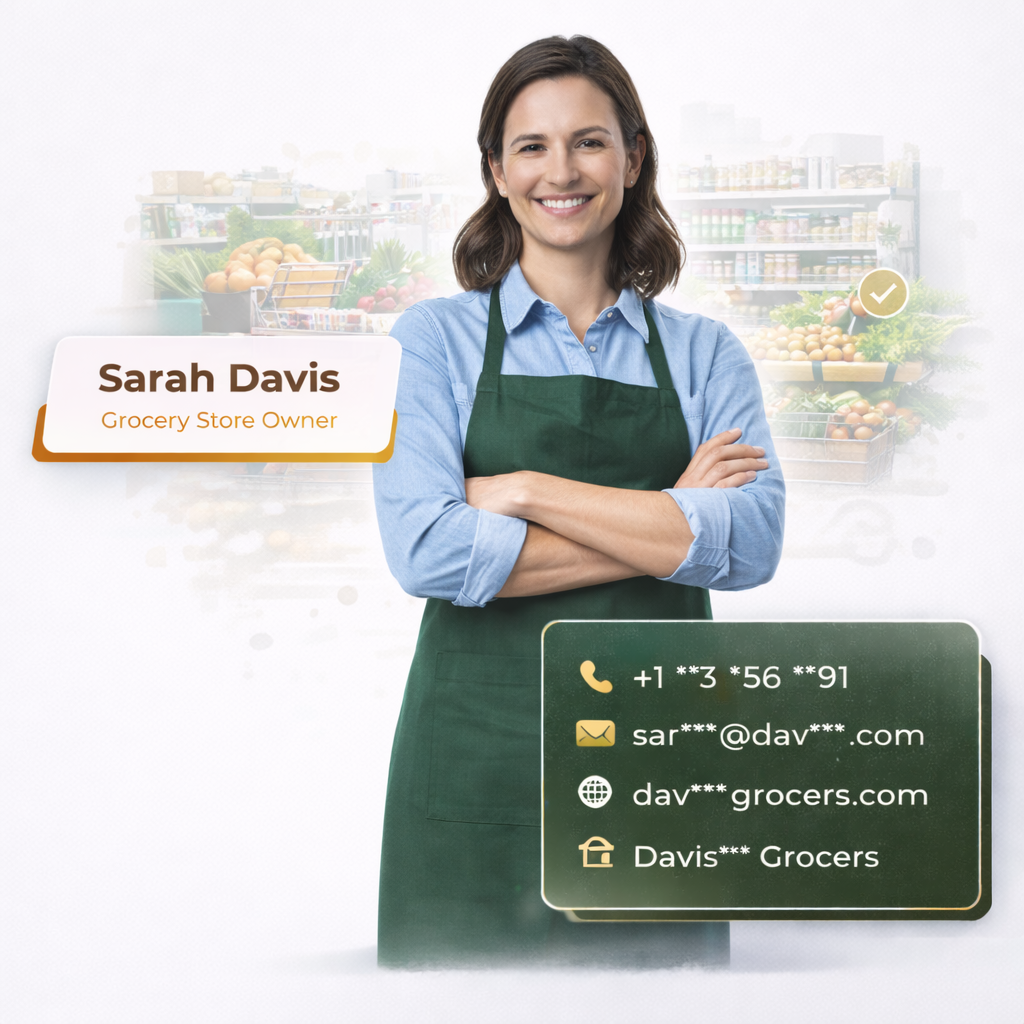
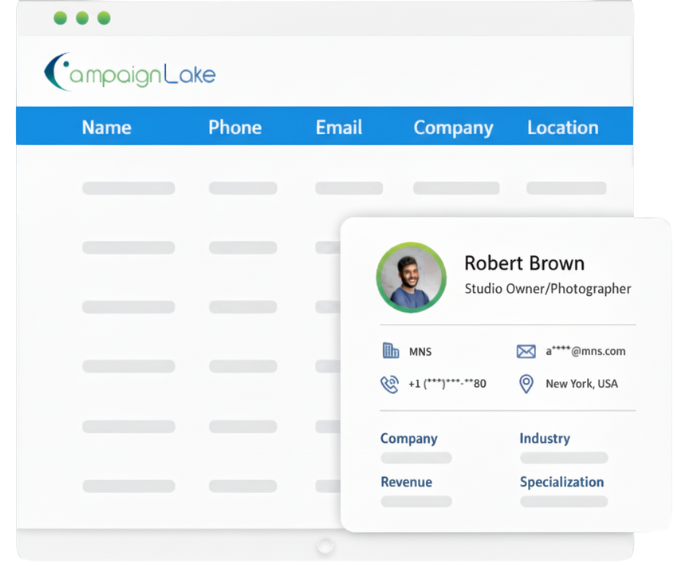
A verified Grocery Industry Email Database includes the contact and company information needed to identify, segment, and reach decision-makers across the grocery retail industry.
Contact Details
Company Information
Location & Classification Data
This data helps businesses target grocery store owners, buyers, procurement managers, and retail executives with more relevant outreach campaigns.
A Verified Supermarket Email List allows businesses to connect directly with key decision-makers working across supermarkets and grocery retail chains. These professionals are responsible for purchasing products, selecting vendors, managing store operations, and implementing new retail technologies.
C-level executives, founders, and owners control purchasing decisions and partnership approvals. If you’re selling high-value B2B solutions, owners and executives are often the final key decision-makers.
Buyers and procurement managers handle vendor selection and supplier relationships day to day. If your product goes on shelves or supports store operations, buyers are your primary targets.
Store managers oversee daily operations at individual locations, while regional directors manage multiple stores. Both roles influence operational purchases like equipment, software, and services.
Specialty food retailers focus on artisan products, gourmet selections, organic foods, and premium customer experiences. Reaching buyers, category managers, and store owners helps vendors build relationships with decision-makers responsible for sourcing unique and high-value products.
The Grocery Stores Email Database includes a wide range of grocery retail businesses, allowing marketers to target different segments of the food retail industry. From large supermarket chains to independent neighborhood stores, the database covers various grocery store formats that serve diverse consumer needs.
Large multi-location chains and regional supermarket brands typically have centralized purchasing departments. Reaching the right contact at headquarters can open doors to multiple store locations.
Single-location, locally-owned stores—including neighborhood grocers and convenience stores—operate differently. The business owner often makes all buying decisions directly, which can shorten your sales cycle considerably.
High-end retailers, cheese shops, wine and liquor stores, and imported food specialists serve premium-focused customers. Their purchasing criteria often emphasize quality and uniqueness over price, similar to restaurant buyers sourcing premium ingredients.
Health-focused grocery stores and natural food markets cater to wellness-conscious consumers, with U.S. organic product sales reaching a record $71.6 billion in 2024. Vendors in the food and beverage industry selling organic, sustainable, or health-oriented products find strong alignment with this segment.
Using a Grocery Store Email List for B2B outreach allows businesses to connect directly with grocery retail decision-makers who influence purchasing and vendor partnerships. Instead of relying on broad marketing strategies, a targeted email database helps you reach store owners, buyers, and procurement managers responsible for selecting products and services.

A verified list bypasses gatekeepers entirely. Rather than cold-calling a general store number and hoping to get transferred, you reach the buyer or owner directly.
Pre-built lists eliminate weeks of manual research. Your team can start outreach the same day the data arrives, which helps you generate high-quality leads faster.
Precise targeting by role, location, and store type reduces wasted spend. You’re not paying to reach contacts who will never buy from you.
The same data works across email marketing, cold calling, direct mail, and LinkedIn outreach. One purchase supports multiple campaign types.
Looking for a Grocery Store Mailing List for Sale? CampaignLake provides verified contact data for grocery store owners, buyers, procurement managers, and retail executives. Filter contacts by location, company size, revenue, job title, and store type to reach the right prospects faster.
When it comes to reaching grocery retail decision-makers, data accuracy, targeting capability, and deliverability play a crucial role in campaign success. CampaignLake provides a high-quality Grocery Stores Email List designed to help B2B companies connect with supermarket owners, grocery store managers, retail buyers, and procurement leaders across the food retail industry. Our database is built to support targeted marketing, high-conversion outreach, and scalable lead generation.
CampaignLake offers a verified Grocery Retailer Contact List with regularly validated contact details to ensure high accuracy and low bounce rates. This helps businesses run reliable email marketing campaigns and reach real grocery retail decision-makers.
The database includes contacts such as grocery store owners, supermarket executives, category managers, procurement heads, and store managers, making it easier to promote products or services to professionals responsible for purchasing decisions.
Our database provides access to grocery retailers across the United States, Europe, and international markets, helping businesses expand into new regions and reach a wider network of grocery store decision-makers.
Our grocery stores email list can be segmented by location, job title, company size, revenue, and store type. This allows marketers to target the most relevant grocery retailers and improve the performance of their B2B outreach campaigns.
CampaignLake continuously updates its grocery stores contact database to keep the information fresh and relevant. Updated data ensures your marketing campaigns reach active businesses within the grocery retail industry.
Whether you are running email marketing campaigns, sales outreach, lead generation programs, or vendor partnership campaigns, CampaignLake’s grocery stores email list helps you connect with the right prospects faster and generate qualified B2B leads.

Filter by supermarket chains, independent grocers, specialty stores, or organic retailers based on your ideal customer profile. Different store types have different buying behaviors and budget levels.
Target by state, city, ZIP code, or region. Geographic segmentation is particularly useful for localized campaigns or territory-based sales teams covering specific areas.
Reach specific job roles like owners, buyers, or store managers depending on who makes purchasing decisions for your product. A packaging vendor might target buyers, while a consulting firm might focus on owners.
Focus on stores that match your target company size. Small independents and large regional chains have different purchasing processes and budget thresholds.
CAN-SPAM Act Requirements – The CAN-SPAM Act governs commercial email in the United States. Compliant lists support lawful B2B outreach with proper opt-out mechanisms and accurate sender information. Working with a compliant provider protects your organization from legal risk.
GDPR and International Data Protection – GDPR, the General Data Protection Regulation, applies to EU data subjects. If your campaigns target international contacts, working with a GDPR-compliant provider becomes essential.
Ensuring Opt-In and Permission-Based Contacts – Opt-in data means contacts have consented to receive business communications. This consent reduces spam complaints and improves deliverability rates, since recipients are more likely to engage with messages they’ve agreed to receive.
| Feature | CampaignLake | Typical Data Providers |
|---|---|---|
| Grocery Store Contacts | 75,000+ Verified Records | Varies by Provider |
| Deliverability Rate | Up to 95% | Often Unspecified |
| Data Verification | 7-Tier Verification Process | Basic Verification |
| Database Updates | Every 45 Days | Monthly or Quarterly |
| Geographic Coverage | USA, Canada, Europe & Global Markets | Limited Coverage |
| Segmentation Options | Location, Revenue, Job Title, Store Type, Employee Size | Basic Filters |
| Compliance Standards | GDPR, CAN-SPAM, CCPA, CASL | Varies |
| CRM-Ready Delivery | Excel & CSV Formats | Varies |
| Free Sample Available | ✔ Yes | Not Always Available |
| Dedicated Support | ✔ Yes | Limited Support |
Public records, directories, registrations, opt-in sources
Verify names, job titles, and company associations
Format and structure validation
Active domain and MX record checks
Identify invalid, disposable, and risky emails
Manual verification and duplicate removal
Refresh records every 45 days
CampaignLake’s grocery store owners email list includes verified opt-in contacts validated through a 7-tier verification process. Data is delivered in CRM-ready formats including Excel and CSV, and supports segmentation by store type, geography, job title, revenue, and employee count. All records comply with GDPR, CAN-SPAM, CCPA, CASL, and other global regulations.
Request a free sample to review data quality before purchasing, or contact reach@campaignlake.com with your targeting requirements.
Make Your Marketing Goal as specific as possible and get in touch with CampaignLake at reach@campaignlake.com or call +1 888-840-3334 to avail our highly responsive Supermarket Executive Email List!
A grocery store email list is a verified database of grocery store owners, buyers, managers, procurement teams, and other retail decision-makers. It helps businesses reach the right contacts for B2B outreach, partnerships, and lead generation.
The database may include grocery store owners, supermarket executives, buyers, procurement managers, category managers, store managers, and regional directors. These are the people most likely to influence purchasing and vendor decisions.
Typical data fields include full name, business email address, direct phone number, company name, job title, location, employee size, revenue range, SIC code, and NAICS code. Depending on the package, it may also include website URL, LinkedIn profile, and social media details.
Yes, the list is verified to help reduce bounce rates and improve outreach quality. A strong verification process usually includes syntax checks, domain validation, deliverability testing, and manual quality review.
A high-quality grocery store database should be updated regularly so the contacts stay fresh and relevant. If your process uses continuous refresh cycles, mention that clearly on the page to build trust.
Yes, you can segment the list by store type, including supermarket chains, independent grocery stores, gourmet food stores, organic retailers, and specialty food shops. This makes it easier to build more targeted and higher-performing campaigns.
Yes, segmentation by city, state, ZIP code, country, job title, revenue, and employee size is one of the biggest advantages of a grocery store email list. It helps you focus on the exact prospects that match your ideal customer profile.
Yes, this list is designed for B2B lead generation, supplier outreach, and retail prospecting. It is especially useful for companies selling food products, packaging, POS systems, logistics services, retail technology, and merchandising solutions.
The database is intended for compliant B2B outreach and should follow applicable rules such as CAN-SPAM, GDPR, CCPA, and CASL where relevant. Use careful wording and avoid making legal guarantees.
Yes, offering a free sample is a strong trust signal because it lets prospects review the data quality before buying. Put the sample request call to action near the FAQ section so visitors can act quickly.
The list can be delivered in CRM-ready formats such as Excel and CSV. This is useful for buyers who want fast import into sales and marketing systems.
A verified grocery store email list helps you reach decision-makers directly, shorten sales cycles, and improve campaign ROI. It also reduces the time spent searching for contacts manually.
Pricing usually depends on list size, geography, segmentation, and the number of filters included. If your pricing is custom, make that clear so buyers know they can request a quote.
A grocery store email list is focused on email-based outreach, while a grocery store mailing list may also refer to broader contact data used for multichannel campaigns. On many websites, the terms are used interchangeably.
Yes, you can segment the list to focus on organic grocery stores and natural food retailers if that is part of your targeting criteria. This is especially useful for brands selling organic, sustainable, or health-focused products.