Follow us on :

- Our Database
- Industry
- Healthcare
- Technology
- International
- C - Level
- Professionals
- Datacards
- Resources
- About Us
- Contact Us
According to the Global Wellness Institute, the global wellness economy reached $6.8 trillion in 2024 and is projected to grow to nearly $9.8 trillion by 2029, expanding at a strong annual rate of over 7% . In the U.S. alone, the market is valued at around $2 trillion, with consumers spending thousands per year on fitness, nutrition, and wellness solutions.
Reaching gym owners, fitness directors, and wellness professionals through cold outreach is notoriously difficult. Generic contact data leads to bounced emails, wasted ad spend, and campaigns that never gain traction.
CampaignLake’s health and fitness email list solves this by providing verified contact information for decision-makers at gyms, health clubs, yoga studios, and wellness centers.
Verified
Opt-in Contacts
Deliverability
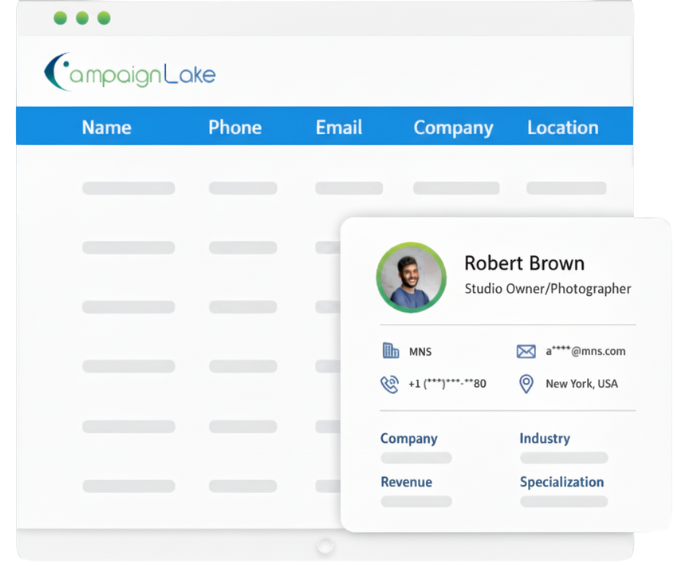
DataFields









A health and fitness email list is a B2B contact database of professionals working at gyms, fitness centers, wellness facilities, and health clubs. The list typically includes gym managers, wellness directors, nutrition specialists, personal trainers, and fitness club owners. Data points cover name, email, phone number, location, job title, and facility type—everything you’d want to run targeted outreach to decision-makers in the fitness industry.
Think of it as a shortcut. Instead of manually searching LinkedIn or scraping websites for gym owner contacts, you get a ready-made database with verified information. The contacts are opt-in, meaning they’ve agreed to receive business communications.

Generic outreach to fitness professionals rarely works. Gym owners and wellness directors receive dozens of pitches weekly, so standing out requires knowing exactly who you’re talking to and what they care about. A verified email list solves the targeting problem upfront.
Pre-verified contacts connect you directly with people who control budgets and make purchasing decisions. You skip the gatekeepers—front desk staff, general inboxes, outdated contacts—and land in the inbox of someone who can actually say yes.
When you segment by role, facility type, or geography, your messaging becomes immediately relevant. A pitch to a boutique yoga studio owner looks different from one to a 24-hour gym chain manager. Targeted lists make that personalization possible without extra research time.
High bounce rates hurt your sender reputation, which affects future deliverability across all your campaigns. Verified data keeps bounce rates low, protecting your email infrastructure and ensuring messages reach real inboxes.
Permission-based data protects your brand from regulatory penalties. GDPR covers contacts in Europe, CAN-SPAM applies to U.S. recipients with fines up to $53,088 per violation, and similar laws exist in Canada (CASL) and Australia (ACMA). Using opt-in contacts keeps you on the right side of all of them.
The value of any contact database depends on what information comes with each record. More data fields mean more ways to segment and personalize your outreach.
With fields like facility type and employee size, you can build highly specific lists. For example, you might target only yoga studios with fewer than 10 employees in California, or focus on health club chains with estimated revenue above $1 million.
Different businesses use fitness industry data for different purposes. Here’s who typically buys this type of list and why.
Equipment companies and supplement brands use fitness email lists to reach facility buyers directly. Rather than relying solely on distributors or trade shows, they connect with gym owners who make purchasing decisions for their locations.
Software companies target owners and managers to sell membership management, scheduling, or payment platforms. The fitness tech space is competitive, so reaching decision-makers before competitors matters.
Agencies running lead generation campaigns for health and fitness clients rely on accurate contact data. A verified list allows them to execute campaigns confidently without worrying about deliverability issues hurting client results.
Corporate wellness vendors reach HR and wellness coordinators at fitness facilities that partner with employers. Corporate wellness programs represent a growing $68 billion market and an expanding revenue stream for many gyms and studios.
Fitness expos, industry conferences, and certification workshops all require targeted promotion.
Event organizers use fitness email lists to fill seats with relevant attendees who actually care about the content.
Recruiters source qualified personal trainers, fitness instructors, and facility managers. Access to verified contact information speeds up candidate outreach compared to cold LinkedIn messages.
Even great data underperforms without proper execution. Here’s what separates campaigns that convert from ones that get ignored.
Run a test batch or request a sample before deploying your full campaign. A small test catches potential issues—high bounce rates, spam complaints, low engagement—before they damage your sender reputation.
Email alone rarely closes deals. Combining email with follow-up calls, LinkedIn messages, and direct mail creates multiple touchpoints. Prospects who see your name across channels are more likely to respond.
People change jobs, facilities close, and contact information becomes outdated. Requesting updated data every few months keeps your outreach effective and prevents wasted effort on dead contacts.
Generic subject lines get ignored. Mentioning the recipient's facility type, role, or location creates immediate relevance. "New scheduling software for yoga studios in Austin" performs better than "Check out our software."
Monitor bounce rates, open rates, and click-through rates continuously. Bounce rates above 2% signal data quality issues and risk ISP penalties. Low open rates might mean your subject lines or send times are off.
When and how often you send emails can significantly impact campaign performance. Health and fitness professionals—like gym owners or trainers—often check emails early in the morning or late evening outside peak client hours.
Not all data providers deliver equal quality. Here’s what to evaluate before making a decision.

Ask how contacts are verified. Look for multi-step processes combining AI technology with human validation. Single-step verification catches obvious errors, but multi-tier processes catch more subtle issues like job title changes or company closures.
Confirm the provider follows GDPR, CAN-SPAM, CCPA, and other regulations. All data in the list should be permission-based. Ask directly: “Are all contacts opt-in?” If the answer is vague, that’s a red flag.
Evaluate filtering capabilities. Can you segment by job title, facility type, geography, revenue, and employee size? The more granular the filters, the more targeted your campaigns can become.
Check for deliverability guarantees or replacement policies for hard bounces. Quality providers stand behind their data with concrete commitments—typically offering credits or replacements for contacts that bounce above a certain threshold.
Assess responsiveness and availability. Dedicated support for custom requests and fast turnaround times indicate a provider invested in your success. Slow responses or generic support often signal data quality issues too.
CampaignLake delivers verified, compliant, and customizable health and fitness contact data built for B2B marketers who care about results.
The database covers gyms, health clubs, wellness centers, and boutique fitness facilities across the U.S. and globally. Broad coverage means you can find contacts matching virtually any targeting criteria.
Every contact is permission-based and compliant with GDPR, CAN-SPAM, CCPA, and CASL. You can execute campaigns confidently knowing your data meets regulatory standards in every major market.
Test data quality risk-free with a complimentary sample. Verify accuracy and relevance before committing to a full purchase.
A rigorous verification process combines AI and manual checks to achieve high accuracy. Higher accuracy means fewer bounces and better campaign performance from day one.
Lists are built based on your exact Ideal Customer Profile. Specify facility type, geography, job role, company size, and more—the final list matches your criteria precisely.
Work with a team that understands B2B data and outreach. From initial targeting to campaign execution, you get expert support to refine your audience, improve messaging, and maximize results.
Segmentation turns a generic contact list into a precision targeting tool. The more specific your filters, the more relevant your messaging becomes.

Different facility types have different pain points. A boutique Pilates studio operates nothing like a 24-hour gym chain. Segmenting by facility type—yoga studios, CrossFit boxes, health clubs, personal training centers—ensures your pitch addresses specific concerns.
Localized campaigns often outperform national blasts. Filtering by state, city, or zip code allows for regional promotions, local event invitations, or territory-based sales outreach. A gym owner in Miami has different seasonal concerns than one in Minneapolis.
Owners care about profitability and growth. Managers focus on operations and member retention. Marketing directors think about acquisition costs. Tailoring your message to each role improves response rates because you're speaking to what each person actually cares about.
A small independent studio has different budget constraints than a regional chain with 50 locations. Segmenting by employee count or revenue range helps you pitch appropriately and qualify leads before you even reach out.
Acquiring a quality list involves a straightforward process when you work with a reputable provider.
Start by identifying the job titles, facility types, geographic locations, and company sizes you want to target. Clear criteria lead to better results because the provider can match your specifications exactly.
Provide your specifications through a request form or consultation call. The more detail you share about your ideal customer, the more precisely your list matches your campaign goals.
Validate data quality before committing to a purchase. A sample lets you test accuracy and relevance with minimal risk—you can check email validity, verify job titles, and confirm the data matches what you asked for.
Confirm record counts, pricing, and any custom filters. This step ensures alignment between your expectations and the final deliverable before you pay.
Receive your list in CSV or Excel format for easy import into Salesforce, HubSpot, or other marketing platforms. No reformatting required.
A verified health and fitness email list accelerates prospecting, improves deliverability, and ensures compliant marketing campaigns. The difference between struggling with outdated contacts and connecting with engaged decision-makers often comes down to data quality.
Whether you’re selling fitness equipment, gym software, wellness services, or recruiting talent, the right contact data transforms your outreach effectiveness.
Make Your Marketing Goal as specific as possible and get in touch with CampaignLake at reach@campaignlake.com or call +1 888-840-3334 to avail our highly responsive Health and Fitness Email List!
Pricing varies based on list size, customization level, and included data attributes. Most providers offer tiered pricing or custom quotes based on your specific targeting requirements and volume.
Reputable providers refresh databases every 30 to 90 days. Regular updates account for job changes, new hires, and business closures—keeping your outreach relevant and accurate.
Yes. Most lists arrive in CSV or Excel format, which imports directly into platforms like Salesforce, HubSpot, Mailchimp, and other marketing automation tools.
Databases typically cover commercial fitness businesses including gyms, health clubs, yoga studios, Pilates centers, CrossFit boxes, personal training studios, and corporate wellness facilities.
Minimum requirements vary by provider. Some offer flexible options for smaller, highly targeted lists while others require baseline record counts for custom orders.
Quality providers offer replacement guarantees or credits for contacts exceeding specified hard bounce thresholds. Always confirm the provider’s policy before purchasing.
Many providers offer global coverage including the USA, UK, Canada, Australia, and other major markets. Specify your geographic requirements when requesting a quote.