Follow us on :

- Our Database
- Industry
- Healthcare
- Technology
- International
- C - Level
- Professionals
- Datacards
- Resources
- About Us
- Contact Us
The U.S. commercial real estate market is one of the largest and most data-rich investment ecosystems in the world—valued at over $1.7 trillion in 2026 and continuing to grow steadily as demand for office, retail, industrial, and multifamily properties expands.
Reaching commercial property owners directly—without going through gatekeepers or outdated contact lists—can make or break your B2B marketing campaigns. A commercial property owners email list is a verified database of contact information for individuals and businesses that own office buildings, retail centers, industrial properties, and multi-family housing.
Instead of relying on outdated or generic databases, CampaignLake’s Commercial Property Owners Email List gives you direct access to verified, decision-making property owners across office, retail, industrial, and multifamily sectors. With advanced segmentation and high-accuracy data, you can target prospects based on property type, location, ownership structure, and investment activity—ensuring every outreach is relevant and conversion-driven.
Verified
Opt-in Contacts
Deliverability
DataFields









A commercial property owners email list is a database containing contact information for individuals and businesses that own commercial real estate—office buildings, retail centers, industrial properties, and multi-family housing. The data typically comes from public tax records and business filings, and it includes verified emails, phone numbers, mailing addresses, and property-level details. Unlike residential property owner lists, commercial property databases focus on owners who control income-generating real estate assets.
What makes a property “commercial” in this context? It comes down to the asset type:
The key difference between a commercial property owners database and a general business list is specificity. You’re not just reaching “business owners“—you’re reaching people who own physical commercial assets and make decisions about vendors, services, financing, and property management.

Targeted outreach to verified property owners cuts wasted spend and lifts campaign performance. When your data connects you to the right people, every marketing dollar works harder.
A commercial property owners email list connects you directly to the person or entity with purchasing authority. You're not reaching gatekeepers, property managers, or tenants—you're reaching the owner who can approve vendor contracts, consider acquisition offers, or sign service agreements.
Pre-built lists remove the need to manually search county records, LinkedIn, or public filings. What might take your team weeks to compile becomes available immediately, freeing up resources for campaign execution and relationship building.
Comprehensive data fields enable email, direct mail, phone, and social media campaigns from one list. A multi-channel approach increases touchpoints—campaigns using 3+ channels achieve 287% higher purchase rates compared to single-channel outreach.
Verified, opt-in data helps emails land in inboxes rather than bouncing or hitting spam folders. Bounce rates exceeding 3% can trigger deliverability penalties from major email providers, damaging your sender reputation over time, so starting with clean data protects your email infrastructure and improves long-term deliverability.
Segmentation capabilities allow campaigns focused on specific property categories or regions, and segmented campaigns generate 30% more opens and 50% more click-throughs. For example, you can target only industrial warehouse owners in Texas or retail property owners in metropolitan areas.
Access to a ready-to-use commercial property owners email list allows you to enter new markets faster than competitors still relying on manual prospecting.
A high-quality commercial property owners database includes both contact-level and property-level data, enabling businesses to build highly targeted and personalized outreach campaigns. The more detailed and accurate the data fields, the easier it becomes to segment audiences based on ownership type, property characteristics, and geographic location. This level of precision helps improve engagement, increase response rates, and ultimately drive better ROI from marketing efforts.
Typically, the database contains essential contact details such as the owner’s full name, verified business email, phone number, mailing address, and company name. In addition, it provides valuable property insights like property type (office, retail, industrial, or multifamily), property address, building size, estimated value, SIC/NAICS codes, and geographic data including city, state, and ZIP code. Together, these data points allow businesses to identify high-potential prospects and tailor their messaging for maximum impact.
Lists can be segmented by property category to match your target market. Different property types attract different buyer personas, so selecting the right segment improves campaign relevance.
Office building owners include individuals and corporations that own corporate office parks, downtown high-rises, and suburban office complexes. Commercial cleaning services, IT infrastructure providers, and office furniture suppliers often target this segment.
Retail property owners control shopping centers, malls, standalone retail stores, and restaurant properties. Insurance providers, signage companies, and parking lot maintenance services frequently reach out to this group.
Industrial property owners manage distribution centers, manufacturing plants, logistics facilities, and flex space. Material handling equipment vendors, security system providers, and energy efficiency consultants often focus here.
Multifamily investors hold apartment buildings, condominiums, and residential investment properties with multiple units. Property management software vendors, maintenance contractors, and tenant screening services commonly target this segment.
Mixed-use and hospitality owners control hotels, resorts, and properties combining residential, retail, and office uses. Hospitality technology providers, commercial lenders, and renovation contractors typically pursue this audience.
Land and development property owners include investors and companies holding vacant land, redevelopment sites, or under-construction commercial projects.
B2B use cases span multiple industries. The common thread is a need to reach property owners who control budgets and make purchasing decisions.

HVAC contractors, roofing, landscaping, janitorial, and property management companies use commercial property owner lists to prospect for contracts. Rather than waiting for inbound leads, service providers can proactively reach building owners who may need their services.
Banks, mortgage brokers, and lenders market refinancing, acquisition loans, and investment products to property owners. Campaigns often target owners based on property value, mortgage status, or purchase date.
Real estate investors and brokers identify off-market acquisition opportunities and motivated sellers through targeted outreach. Direct contact with owners bypasses commercial real estate brokers and listing agents, uncovering deals before they hit the market.
Marketing teams run targeted ABM campaigns to specific property types, regions, or owner profiles. This approach works particularly well for enterprise software vendors and high-value service providers selling into commercial real estate.
Understanding data sourcing helps you evaluate list quality and compliance. Reputable providers combine multiple sources and verification methods.
Government-maintained ownership records tied to property tax filings serve as the primary source. County tax assessor data is public information and provides the foundation for most commercial property databases, including lists used to reach real estate developers and investors.
Industry associations, trade publications, and professional networks provide contacts where owners have consented to receive communications. Opt-in data typically delivers higher engagement rates than data compiled solely from public records.
Secretary of state records, LLC filings, and corporate registrations identify ownership entities. This is especially important for commercial properties held by LLCs, trusts, or holding companies rather than individuals.
Reputable providers use AI and manual verification, email validation, and regular refresh cycles to maintain accuracy. Property ownership changes frequently, so look for providers who update their databases at least quarterly.
CampaignLake provides the accuracy, compliance, and customization that B2B marketers require when targeting commercial property owners.
Customization ensures you only pay for contacts matching your ideal customer profile. The more specific your targeting criteria, the higher your campaign relevance and conversion rates.

Geographic targeting allows you to focus on specific states, cities, ZIP codes, counties, MSAs, or custom radii around a location. Service businesses with defined territories or regional sales teams benefit most from geographic segmentation.
Segmenting by owner type (individual vs. corporate), company size, revenue, or years in business helps align your outreach with your ideal customer profile. Corporate owners often have different purchasing processes than individual investors.
Filtering by commercial property category, square footage ranges, or unit counts narrows your audience to relevant prospects. A commercial cleaning company might target only office buildings over 50,000 square feet, for example.
SIC or NAICS codes allow targeting owners in specific industries or with particular business characteristics. This is useful when your product or service appeals to owners in certain sectors.
Not all providers deliver the same quality. Here’s what to evaluate before purchasing.
A compliant, accurate commercial property owners email list accelerates your outreach and improves campaign performance. With verified owner contact details, advanced segmentation options, and data accuracy you can trust, you can connect with the right decision-makers faster and close more deals with confidence.
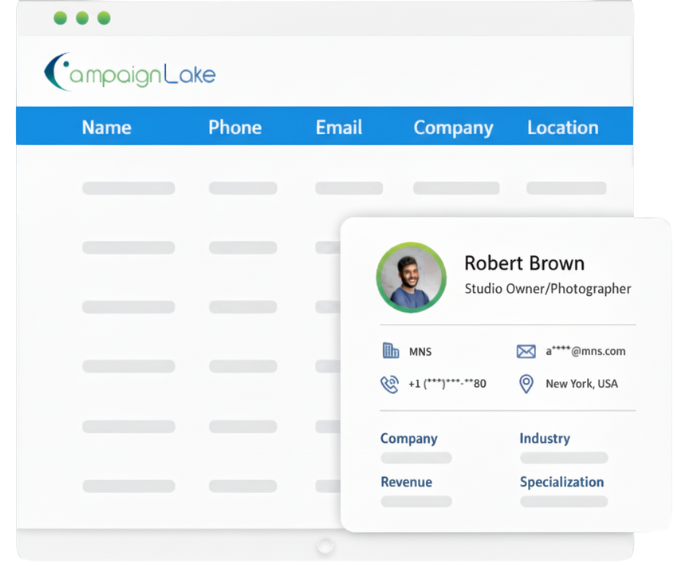
Make Your Marketing Goal as specific as possible and get in touch with CampaignLake at reach@campaignlake.com or call +1 888-840-3334 to avail our highly responsive Commercial Property Owners Email List!
Most providers deliver lists in CSV or Excel format, which can be directly imported into popular CRMs like Salesforce, HubSpot, or Zoho using standard upload features. The process typically takes just a few minutes.
Deliverability depends on the provider’s verification processes and your sending practices. Reputable providers with rigorous verification typically deliver high inbox placement rates, though exact performance varies based on your email infrastructure.
Yes. Comprehensive databases include mailing addresses and phone numbers alongside email addresses, enabling coordinated multi-channel outreach campaigns from a single data source.
Property ownership changes frequently. Refreshing your list quarterly or working with a provider that updates data regularly helps maintain accuracy and deliverability over time.
A mailing list traditionally refers to physical postal addresses for direct mail, while an email list contains electronic addresses. Many providers now offer databases with both contact types included.
Compliant lists are built from opt-in sources and public records. Reputable providers follow CAN-SPAM, GDPR, CCPA, and other applicable regulations—always verify compliance before purchasing.