Follow us on :

- Our Database
- Industry
- Healthcare
- Technology
- International
- C - Level
- Professionals
- Datacards
- Resources
- About Us
- Contact Us
Find the right companies, professionals, and decision-makers for your next marketing or sales campaign. CampaignLake provides industry-specific B2B data cards with contact, company, firmographic, and technographic information to help you build targeted prospect lists.
Explore healthcare, professional, technology, and industry-specific databases, or request a customized list based on your ideal customer profile, target geography, job titles, and business requirements.
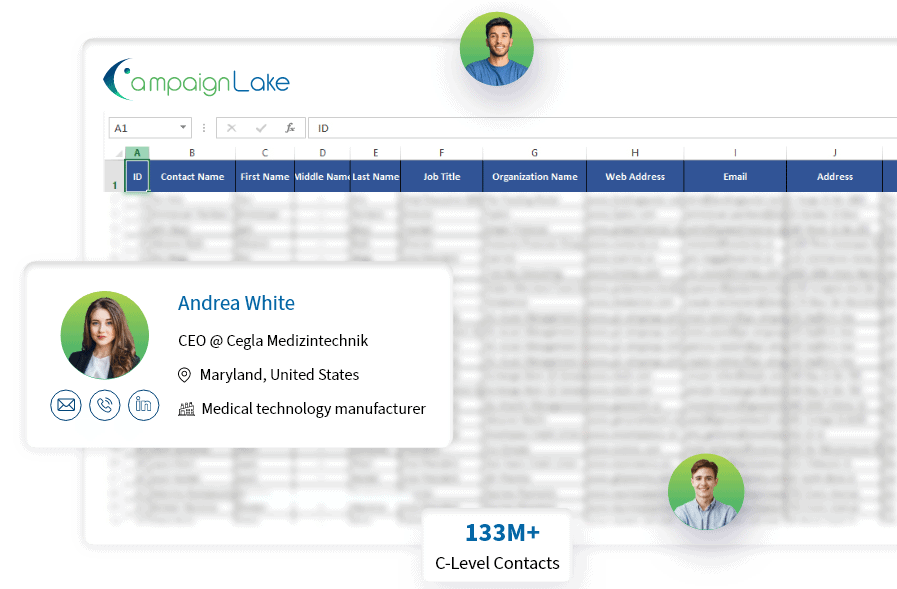
CampaignLake B2B Data Library
CampaignLake B2B data cards help businesses discover targeted company, contact, professional, industry, and decision-maker data for sales, marketing, account-based marketing, and CRM enrichment.
Explore industry-specific databases, identify relevant prospects, and request a customized data list based on your target industry, geography, job title, company size, technology usage, or other segmentation requirements.
Database figures are subject to ongoing validation and updates. Confirm current record totals, accuracy methodology, consent status, and deliverability measurements before publishing or using these claims.
With our B2B database, enhance the chances of growing your business ROI. These B2B Data cards assist you in tailoring marketing efforts and personalizing communications with prospects, which in turn drives greater results. Check out the table below to know the accurate insights of our B2B data cards!


Browse CampaignLake’s industry, professional, healthcare, technology, investor, and geographic data-list pages. Select a category or search for a specific audience to open the relevant landing page.
| Landing page | Coverage group | Explore |
|---|
Publishing note: verify that each destination returns HTTP 200 and is indexable before launch. Remove redirected, duplicate, staging, or discontinued URLs from the array below.
Inside a B2B Data Card
Explore the types of business, professional, company, and technology information that may be included in a CampaignLake data list. Available fields depend on the selected audience, industry, geography, and data requirements.
Example decision-maker profile
Contact or professional name, where available.
Role, position, department, or seniority level.
Professional email information, subject to availability.
Business phone or direct-dial information, where available.
Company name, website, industry, and organization type.
Company size, revenue range, location, and business category.
Technology or platform information for relevant audiences.
Country, state, city, ZIP code, or regional targeting fields.
Simple Data Discovery Process
Find the audience you want to reach, define the information you need, and request a customized B2B data solution built around your campaign requirements.
Select the industry, profession, company type, technology, geography, or job title relevant to your target market.
Choose your audienceIdentify the fields you need, such as business email, phone number, company details, job title, firmographics, or technology signals.
Select data fieldsConfirm your audience, location, segmentation requirements, record type, and available data fields before requesting the list.
Refine your criteriaSubmit your requirements to the CampaignLake team and discuss the appropriate list format, audience scope, and delivery details.
Request a custom listShare your target industry, geography, job titles, and required data fields to begin a customized list request.
Available fields, audience coverage, validation procedures, and delivery options depend on the selected data list and confirmed requirements.
CampaignLake B2B Data Cards help you understand how business contact information is reviewed, organized, and prepared for targeted outreach. Our methodology focuses on data relevance, consistency, validation, and usability.
We begin by identifying the required industry, company type, geography, job function, and decision-maker profile. This helps establish which records are relevant to your campaign.
Business records may be collected from relevant professional, organizational, and publicly available business sources. Additional fields can be organized to support segmentation and prospect research.
Available contact details are reviewed for consistency and suitability. Validation checks may include email formatting, domain-level review, duplicate detection, and record completeness.
Records are examined for mismatched fields, incomplete information, outdated details, and inconsistencies between company and contact data. Records that do not meet the selected requirements may be excluded or flagged for further review.
Data is organized into consistent formats to make it easier to review, filter, import, and manage. Duplicate or overlapping records may be identified and removed during the preparation process.
Final records can be arranged according to relevant criteria such as industry, location, company size, role, specialty, or other requested attributes, making the data easier to use in CRM and marketing workflows.
Every campaign has different requirements. Our review process is designed to help teams evaluate whether a data card aligns with their intended audience, required fields, and outreach objectives.
Need a data card tailored to your target market and business requirements?
Discuss Your Data Requirements →From prospect discovery to market expansion, CampaignLake B2B Data Cards can support multiple business workflows. Use organized company and professional information to create more focused, relevant, and measurable outreach campaigns.
Connect your campaign goals with the right audience, company characteristics, and professional contact fields. Use structured data to organize prospecting activities across teams and channels.
Discover potential prospects using industry, location, company type, role, and other relevant business attributes.
Build segmented email campaigns for specific audiences, industries, professional roles, or business needs.
Support account selection, stakeholder mapping, and personalized outreach across high-priority business accounts.
Explore business segments, evaluate potential markets, and identify organizations relevant to your research goals.
Help sales teams identify decision-makers and organize outbound prospecting across territories and industries.
Add useful business fields and segmentation details to existing customer or prospect records.
Need a data card built around your target industry, location, company profile, or professional audience? CampaignLake can help you define the fields and segmentation requirements for your campaign.
Discuss Your Requirements →Responsible B2B data usage requires clear business objectives, appropriate safeguards, and awareness of applicable privacy and communication requirements. Use business information thoughtfully throughout every stage of your campaign.
Use B2B contact information for relevant professional activities, such as prospecting, account research, customer communication, and business development.
Purpose-driven useConsider the privacy and marketing requirements that apply to your organization, audience, location, industry, and selected communication channel.
Privacy awarenessIdentify the sender clearly, use accurate subject lines, provide required notices, and honor unsubscribe or opt-out requests when conducting outreach.
Responsible outreachReview records before use and avoid relying on information that is no longer relevant to the intended campaign or audience.
Data relevanceLimit access to authorized team members and use appropriate safeguards when storing, transferring, importing, or connecting records to business platforms.
Access protectionMaintain suppression lists, honor communication preferences, and respond appropriately to applicable requests concerning access, correction, deletion, or continued communication.
Preference managementThese data points help businesses build highly targeted marketing campaigns.
Firmographic data describes a company’s characteristics such as industry, employee size, revenue, and location. Technographic data identifies the technologies a company uses, such as Salesforce, HubSpot, Shopify, AWS, WordPress, Microsoft Azure, or Google Analytics. Combining both data types helps businesses identify ideal customers more effectively.
Experts recommend updating B2B databases every 30–90 days because job changes, company mergers, role transitions, and business closures occur frequently. Regular updates help maintain data accuracy and improve campaign performance.
Yes, B2B contact data can be used for legitimate business communication when businesses comply with applicable privacy regulations such as GDPR, CAN-SPAM, CASL, CCPA, and other regional laws. Organizations should always follow consent, transparency, and opt-out requirements.
Technology user databases help businesses identify organizations using specific technologies such as Salesforce, HubSpot, AWS, Microsoft 365, Shopify, WordPress, or React. This enables marketers to create highly relevant ABM campaigns and target companies most likely to benefit from their solutions.
B2B data cards are widely used across industries including healthcare, technology, manufacturing, financial services, education, logistics, construction, real estate, hospitality, retail, telecommunications, and professional services. Organizations use these databases to improve lead generation and customer acquisition.
Decision-makers can be identified through job titles, organizational hierarchy, department responsibilities, and purchasing authority. Common decision-makers include CEOs, CFOs, CIOs, CTOs, CMOs, procurement managers, directors, vice presidents, and department heads.
Buying signals are indicators that suggest a company may be interested in purchasing products or services. Examples include technology adoption, hiring activity, funding announcements, company growth, content engagement, and website behavior. These signals help sales teams prioritize high-intent prospects.
Selecting a reliable provider can significantly impact lead quality and campaign success.